Why Australian brands still sound American — and how to stop
Australian brands keep importing American sentences: the journey, the reach-out, the we've-got-you. Global brand books and US legal templates do most of the damage. You can sound like this country without a kangaroo or a slang glossary. Delete the voice written for another market.
Tom Whittaker, Language Editor · 18 March 2026 · 9 min read · Updated 4 February 2026
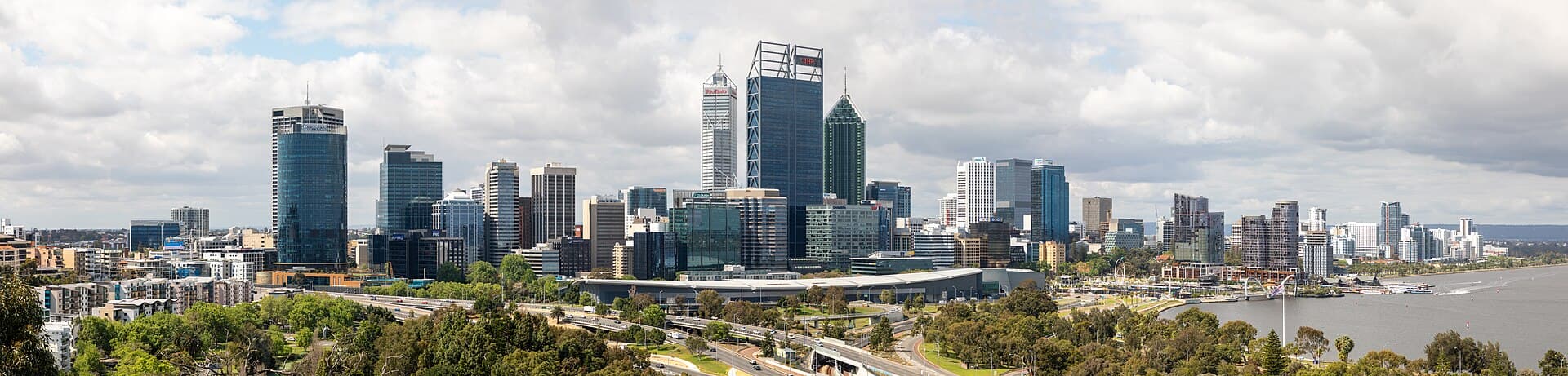
Open the app of an Australian company that should know better and you will be invited on a journey. You will be asked to reach out. You will be told they've got you. You will be offered a store locator for a suburb that is called a neighborhood in the code and a neighbourhood in the about page. The campaign, if there is one, will have a flattened vowel and a harbour. The sentences that do the work — the email, the chatbot, the default — will sound as if they were written in a headquarters that has never had to say "mobile" to a lawyer.
This is not a mystery of national character. It is a supply chain. Playbooks, templates and brand books arrive from the United States, or from a global team that treats the United States as the default English. Local marketing adds a garnish. Legal, in a hurry, accepts the American template because it has already been through a bigger legal department. The garnish is how we get "g'day" on a homepage and "please find attached herewith" in the same organisation. Neither is a voice. Both are imports.
The fix is not a slang kit. Australia already has a written English that can be plain, dry and specific. The work is to stop overwriting it. That is language work with an Australian accent, which is not the same thing as an accent in the voice-over.
How the American sentence gets in
It gets in through the brand book that was written for twelve markets and approved in one. The book has a personality chart, a list of words we say, and a sample paragraph about unlocking potential. The Australian market is a chapter, or a footnote about spelling. Spelling is the least of it. Organise and colour can be correct and the sentence can still be Californian: too intimate, too victorious, too sure that a bank account is a journey and a customer is a fan.
It gets in through software. Product copy is often written in the same file as the US build. The strings say "check", "zip code", "touch base", "got questions? we've got answers." A localiser is budgeted for French and Japanese. Australian English is assumed to be a spelling pass. It is not. It is a legal and cultural pass: what you can claim, how you address a stranger, whether "free" means free, whether a superannuation balance can be spoken to like a gym membership.
It gets in through legal templates that were bought, or borrowed, from a US parent. Terms pages, privacy notices, collection letters, workplace policies. Some of that borrowing is harmless. Some of it imports a tone — chirpy compliance, aggressive disclaimers, a first-name cheerfulness in a collections context — that Australian readers read as fake or as a stall. The ACCC, AFCA and the various industry codes will not be impressed that the sentence was approved in Delaware. They will read the sentence that ran here.
It gets in through the agency's own reading diet. Strategy frameworks, category-design rhetoric, the American keynote that treated a market of 25 million as a rehearsal for a market of 330 million. The frameworks can be useful after you have a position. As a voice, they produce claims that cannot be staffed and sentences that cannot be said at a service desk in Perth.
It gets in because sounding American still reads, to some boards, as sounding big. That is an old colonial habit in a new accent. A mid-market Australian company does not become global by saying "reach out". It becomes harder to believe.
What "American" means on the page
Not every American writer sounds like this. The problem is the exported commercial register: a second person that is always excited, a verb that is always unlocking, a problem that is always a journey, a company that is always on your side in a way no company can be on a Tuesday.
The register has tells. "We've got you." "You got this." "Let's do this." "Your journey starts here." "We're so excited to announce." "Please don't hesitate to reach out." "That's a great question" from a bot that cannot answer it. "Store" for shop in a context where shop is the word. "Movie" on a cinema site that used to say film and now says content. "Color" leaking into a CSS variable that then leaks into an email. "Favorite." "While supplies last" on a market that has Australian Consumer Law and a different idea of what a limited offer can claim.
There is also the legal-commercial hybrid that US templates love and Australian readers distrust: the friendly paragraph, then the knife. "We care about your privacy" above a consent that is not a consent. "We're here to help" above a fee. Australian customers have had a decade of this from platforms. They do not need it from their insurer.
A third tell is the missing institution. Copy that never mentions a regulator, a code, a super fund, a concession, a concession card, a myGov, a BSB, a GP, a chemist, a servo, a council. Not because every paragraph should be a civic list, but because a brand that never touches those nouns does not live here. It lives in a category deck.
Kitsch is not the cure
The usual correction is worse than the disease. A kangaroo. A slang page in the brand book. "Fair dinkum" as a value. Mate as punctuation. A voice-over that performs broad Australian for a product that will be explained, two clicks later, in Californian English. This is not localisation. It is souvenir.
Australian English in public writing is mostly not slang. It is spelling, vocabulary, rhythm and a different social distance. We organise, we do not organize. We have colour, a program, a practise as a verb and a practice as a shop. We say mobile, not cell; shop, not store, when we mean the high-street room; fortnight; rubbish; petrol; boot; bonnet; chemist; football in more than one code. We are more likely to underclaim than to cheer. We will wear a dry sentence. We will not wear a sentence that calls us "guys" in a letter about a death benefit.
The social distance matters more than the glossary. American consumer copy often assumes a familiarity that Australian institutions cannot use. A bank, a university, a department, a hospital, a super fund — these organisations should be plain, not matey. Plain is already local. Matey is a performance that staff will refuse when the letter is a refusal. If you want the craft in one place, tone of voice is a system, not a mood, and inclusive language is part of the same pass, not a brochure you add after the American template has been "toned down".
Humour is available. It is not mandatory. The Australian brands that are actually funny are funny because the product and the room allow it — a food, a pub, a retailer that can afford a wink. A government service that tries to be funny is usually asking to be quoted in estimates. Do not install humour as a national requirement. Install accuracy.
Global books, local sentences
If you are a subsidiary, you will not win a war against the global book in a single meeting. You can win the ordinary surfaces.
Make a local addendum that is allowed to override the book on customer-facing Australian sentences. Keep the mark if you must. Rewrite the samples. Ban the journey language in this market. List the claims that Australian Consumer Law, the industry code and your lawyer will not let travel. Name the words that must stay American because they are the product's name, and the words that must not.
Give the product team a string list that is Australian English, not a fork they have to beg for. If the build is global, fight for a locale that is en-AU in more than the date format. Dates, currency, units, addresses, the word for the thing you post, the word for the thing you ring — these are brand. So is the hold message. So is the 404. So is the empty state in the app that currently says "Oops! Something went wrong" as if the user were a child in an American cartoon.
Bring legal a better template rather than asking them to make the American one "warmer". Warmth is how a bad structure hides. A collections letter can be Australian by being short, direct and free of false intimacy. A privacy notice can be Australian by saying what is collected and why, without a paragraph about believing in transparency. The lawyer who has been flattening your slogans is often waiting for a sentence that already means something.
Agencies can help if they will write the Tuesday work, not only the anthem. An anthem that sounds like Bondi and a transactional email that sounds like Boston is the current default. It is also why staff ignore the brand book. They can hear that the book was not written for them.
How to practise sounding like here
Practise on the jobs that cannot hide. A fee letter. A delay. A product-recall line. A shop-finder that names suburbs correctly. A job ad that does not say "rockstar". A vice-chancellor's message that does not say "reach out". A supermarket pack that does not call a mince a ground. A cinema that still knows the word session.
Read the sentence aloud in an ordinary Australian voice, not a voice-over voice. If you wince, it is probably the import. If you need to put on a character to make it work, it is kitsch. The sentence you want is one a person in the organisation could say to a stranger without performing.
Listen to the institutions that already write in a public Australian English without a brand campaign: the better corners of government style, a good radio newsreader, a well-made ABC explainer, a retailer who still writes a catalogue in the language of the aisle. You are not copying their identity. You are remembering that the country already has a register.
Put a person on the no. Someone has to be allowed to delete "we've got you" from a script without a global alignment meeting. If that person does not exist, the American sentence will return, because it is the default of the tools.
Review the brand film last. Films can afford a little myth. The app cannot. If the film is local and the app is not, customers will believe the app. They are right.
A smaller English, on purpose
Australia is a small market that keeps borrowing a large market's mouth. The borrowing was understandable when the templates were all we had. It is sloppy now. We have lawyers, writers, designers and product people who live here. We have regulators who read. We have customers who have seen enough journeys.
Sounding like here is a set of deletions first. Take out the victory. Take out the false intimacy. Take out the spelling that leaked. Take out the slang that was added as an apology. What remains, if you have a real offer, will be specific enough: a place name, a product, a constraint, a sentence that can be used in Perth without translation.
If nothing remains, the problem was not the accent. It was the position. No voice, American or otherwise, will save a claim the shop floor cannot keep. Write the claim for this market. Then write the sentence as if the reader already lives here, because they do. They do not need a journey. They need to know what you will do, and in which English.
Questions readers ask
- Why do so many Australian brands sound American in their everyday writing?
- They inherit global brand books, US legal templates and software defaults, then add a thin layer of local slang to prove they are here. The American sentences stay because nobody owns the ordinary writing — the app, the hold message, the refusal.
- How do you sound Australian without becoming kitsch?
- Use Australian English, Australian institutions and a plain register, and delete the imported journey language. Do not add kangaroos, mate-in-every-sentence, or a glossary of slang that no service writer can use on a complaint.