Indigenous cultural IP and brand: protocols, not decoration
Country, language and art are not textures for a campaign. They sit inside Indigenous Cultural and Intellectual Property that Australian copyright only partly covers. True Tracks, AIATSIS and Arts Law exist because brands keep decorating themselves with other people's culture. Protocols first. Then, maybe, a mark.
Aroha Bennett, Culture Editor · 28 January 2026 · 10 min read · Updated 4 February 2026
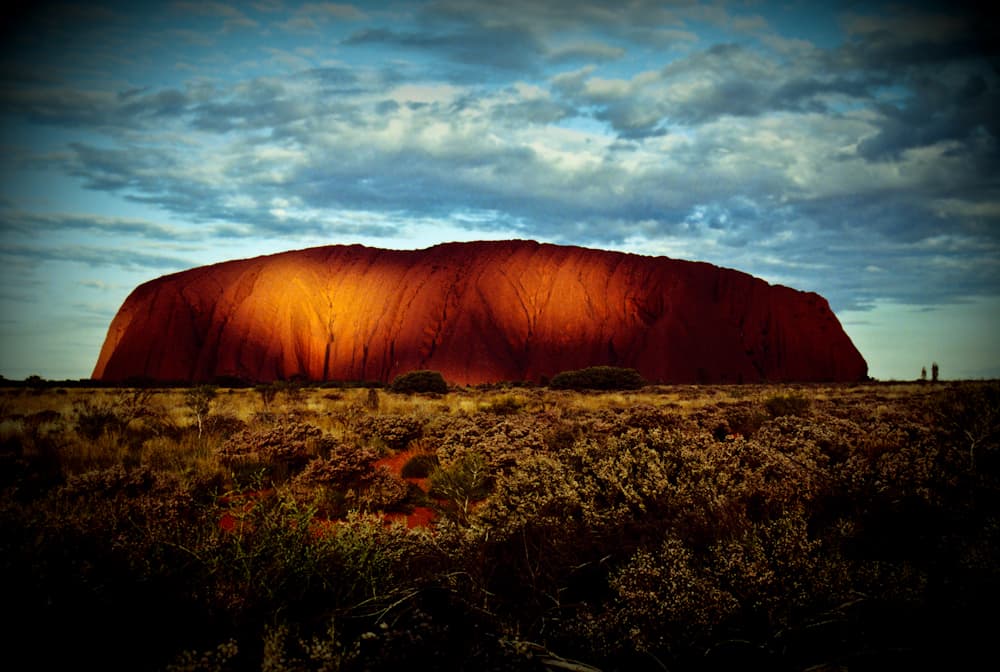
A surprising number of Australian brand books now contain a desert. Sometimes it is a licensed photograph of a place the organisation does not work in. Sometimes it is a pattern that "feels Indigenous" without an artist, a Nation, or a fee. Sometimes it is a word taken from a language the naming committee cannot pronounce, because the word sounded like landscape. This is not a style problem. It is a rights problem that copyright will only half catch, and a relationship problem that a sensitivity reader will not fix after the campaign is booked.
Indigenous Cultural and Intellectual Property — ICIP — is the name Australian legal practice gives to the broader bundle: knowledge, stories, language, designs, biodiversity knowledge, cultural objects, and the right of communities to control how those things are used. The Copyright Act 1968 can protect a particular work by a particular author for a particular term. It is much weaker on style, on communal ownership, on knowledge that was never meant to be a product, and on Country as something other than a location library. Brands that treat the gap as a free texture are not being creative. They are being cheap.
This is Australia work, not a diversity workstream. If your organisation names Country in an acknowledgement, procures from Aboriginal and Torres Strait Islander businesses, or puts a desert in the brand film, you are already in the territory. The question is whether you are in it as a guest with a protocol, or as a decorator.
What the law covers, and what it quietly does not
Start with the floor, because the floor is still ignored.
Copyright can stop you from scanning a painting and putting it on a tote. The carpets cases of the 1990s — Indigenous artists suing over designs reproduced on rugs without authority — are the public reminder that "inspiration" is not a defence when the work is copied. Moral rights can require attribution and can object to derogatory treatment of a work. Designs law, trade marks and passing off have their own corners. The Aboriginal flag is not a free graphic; the copyright history of that flag is a matter of public record, and it should have taught every marketing department that a national symbol can still have an author.
None of that is ICIP. ICIP is the extra, necessary claim: that a community may have rights in knowledge and culture even when no single work is copied, and that those rights do not expire because a mood board found a reference. Australian statute does not yet deliver that claim as a neat property right you can search on IP Australia. Protocol and contract do the work that the Act leaves open. If your lawyer only asks "is it in copyright", you have the wrong question. The right question is "who says we may do this, for how long, on which applications, and what do they get".
Heritage legislation, native title institutions and land councils add another layer when the use is a place, a name, or a story attached to Country. A shoot at a site is not cleared because the tourism board sent a media kit. A language name is not cleared because it appears in a place-name glossary. Naming a company after an Aboriginal word because it sounds like river or sky is one of the more reliable ways to buy a future argument. The ASIC search will not save you. The community was never on the ASIC register.
The documents that already exist
You do not need to invent a moral system in a workshop. The working documents are public, specific, and written by people who have spent decades watching organisations get this wrong.
True Tracks, the protocol framework developed by Terri Janke and Company, is the one Australian institutions keep returning to because it is operational. It is not a vibe. It asks for respect and self-determination as starting conditions, then gets into the things a contract can hold: consent, interpretation, cultural integrity, secrecy, attribution, benefit sharing, the maintenance of culture, and recognition that protection is part of the deal. You can disagree with a clause. You cannot pretend the checklist was unavailable.
The AIATSIS Code of Ethics for Aboriginal and Torres Strait Islander Research is written for researchers, and brands keep discovering they are doing research. A campaign that wants stories, a pack that wants a motif, a "discover the knowledge of this place" content series — these are collection exercises. The Code's insistence on Indigenous-led research, on consent that can be withdrawn, and on benefit that is not a caption, travels into marketing more cleanly than a brand purpose does. If you cannot meet a research ethic, you should not be collecting culture for a media buy.
Arts Law, including the Artists in the Black service, exists because artists and communities are asked to sign the wrong thing. Copyright assignment to the client, perpetual worldwide licences, "we can adapt as we see fit", no approval of applications, no talk of ICIP — these are still standard in agency production contracts. They are standard because they are convenient for a brand portal, not because they are fair or stable. A licence that lets you crop a work onto a beer can, a jet and a recruitment ad is a licence that will eventually meet a community that did not agree to the jet.
Read those documents before you write a creative brief. They will delete half the brief. That is their job.
Decoration is the usual failure
The failure is rarely a villain in a boardroom. It is a sequence that feels professional.
A strategy deck says the brand should feel more Australian. A designer pulls references: red earth, dotting that is not a particular artist's dots, a typeface that looks carved, a word from a public list of language names. A producer asks whether the image is licensed. The stock library says yes. Legal asks whether any living artist is identifiable. Nobody is. The campaign ships. Online, someone from the relevant Nation, or from a different one, points out that the "feel" is a specific visual language, or that the word is not a free noun, or that the place in the photograph is not a backdrop. The organisation discovers protocol after the media has been booked.
A milder version happens inside well-meaning work. An acknowledgement of Country is copied from a slide and dropped on every email. A First Nations advisory panel is announced and then shown finished work. An artist is paid a day rate for a "collaboration" that the brand book will use for five years. A government program uses a generic Aboriginal-and-Torres-Strait-Islander graphic that was drawn in a department in 2011 and has outlived every minister. None of this requires bad people. It requires a process that treats culture as finish.
Inclusive language is the copywriting cousin of the same habit. A paragraph of reverence at the top of a letter, followed by a form that cannot hold a Nation name, is not respect. It is stationery.
Practical steps, in the order that prevents theatre
First, ask whether you need the material. If Country, language or art is being asked to supply depth that the offer does not have, stop. A superannuation performance fee does not become more truthful because a desert is behind it. A chicken salt does not need a Dreaming. A fintech does not need a language name. The most respectful brand decision available to most organisations is abstinence.
Second, if you still have a reason — you work on particular Country, you run a service for Aboriginal and Torres Strait Islander customers, you are commissioning public art, you are a landholder, you are an arts organisation — start with people, not pictures. Art centres, language centres, prescribed bodies corporate, land councils, and the artists or knowledge holders themselves are the beginning. A Sydney studio that "knows someone" is not a rights pathway. Supply Nation can help you find businesses. It is not a cultural licence.
Third, put ICIP in the contract in plain English. Who owns the copyright in the new work. What ICIP remains with the community. Which applications are approved now. Which applications need a further yes — packaging, liquor, gambling, political use, alteration, merchandising, AI training, sublicensing to a retailer. How the artist or community is paid: fee, royalty, both. How they are attributed, including in internal templates that usually strip credits. What happens if a person dies, a group splits, or the organisation is sold. What "stop" looks like. Assignment of all rights is usually the wrong instrument. Convenience is not a legal strategy.
Fourth, budget time for approval of applications, not only for the hero piece. The painting is not the brand. The painting on a sock, a PowerPoint master and a fleet graphic is the brand. If the agreement does not cover those surfaces, your identity system will invent them, and procurement will print them.
Fifth, pay properly and write the payment down as part of the brand cost, not as charity. Benefit sharing is not a hamper. It is money, credit, employment, procurement, and sometimes a decision not to use the work in a category the community has refused. If the finance system can only raise a one-off vendor invoice, fix the finance system. A protocol that dies in Accounts Payable is not a protocol.
Sixth, keep secrets secret. Some knowledge is not for campaign use. If someone tells your team that a story is not to be reproduced, that is the end of the story, not a challenge for the creative director. True Tracks is explicit about confidentiality for a reason. Curiosity is not a right.
Seventh, do the ordinary organisational work that makes the protocol less lonely. Hire. Procure. Brief Aboriginal and Torres Strait Islander staff as staff, not as validators of a finished idea. Put a real owner on the relationship so it does not reset every time the brand manager changes. A new acknowledgement written by the incoming graduate is not continuity.
Language, Country and the mark
Words are where Australian brands keep stubbing their toes, because words feel cheap.
Do not take a language name, a kin term, or a place name in a language you do not have a relationship with. Do not invent a "tribal" sounding string. Do not use a word because a naming agency said it was available on the trade-mark register. Availability on a register is not permission. If you have permission, take advice on spelling, diacritics, and what the word does when it is shouted on a footy jumper. Then decide whether a trade mark over that word is something the community wants you to hold.
Country is not a location credit. If you name the Country you work on, get the name right, and be prepared for the name to be more specific than a state. An acknowledgement that cannot survive a correction is a ritual, not a relationship. Uluru is not a metaphor for endurance in a leadership offsite. It is a place with traditional owners and a long history of being used as an Australian postcard. Your brand does not need another postcard.
Art is not a palette. Dotting, cross-hatching, particular colour stories and particular animals are not "Indigenous design". They are someone's work, or someone's restricted design, or a tourist shorthand that Aboriginal artists have been talking about for decades. If you want a visual collaboration, commission it, credit it, limit it, and do not let the brand portal turn it into a pattern fill. If you want a look that is merely Australian, there is a continent of non-extractive references: printers, sheds, surf clubs, civic type, the ordinary high street. Use those.
What respect looks like when nobody is watching
Respect, in this work, is specific. It is a named person, a named place, a named restriction, a named payment. It is the willingness to kill a layout. It is not a paragraph about walking together. Australian organisations have had enough of those paragraphs. They have not had enough contracts that an art centre can sign without calling Arts Law in a panic.
Be prepared for the answer to be no. No is a successful protocol outcome. It means the process worked. The failed outcome is a yes extracted from the wrong person, or a yes to a hero image that quietly becomes a visual identity.
Be prepared, also, for the work to be smaller than the brand team hoped. A single commissioned work, used on a few surfaces, attributed, paid, and retired when the agreement ends, is a better Australian brand asset than a "cultural world" that the organisation cannot defend. Small and defensible beats pious and wide.
If you do nothing else, take the desert out of the brand book until you can write, on the same page, who allowed it, what they were paid, and which applications are forbidden. That page is the identity. The rest is decoration, and decoration is how this country keeps repeating itself.
Questions readers ask
- Does Australian copyright law cover Indigenous cultural knowledge used in a brand?
- Usually only in part — copyright can protect a particular artwork or text by a living author, but it does not, by itself, protect styles, communal knowledge, language, or Country. That is why ICIP protocols and written agreements sit beside the Copyright Act, not inside a logo lock-up.
- What should a brand do first if it wants to work with First Nations art, language or Country?
- Decide whether it needs to at all. If the answer is still yes, start with the relevant community, art centre or rights holders and a protocol — True Tracks, Arts Law and AIATSIS materials are the working starting points — not with a mood board and a freelance illustrator.